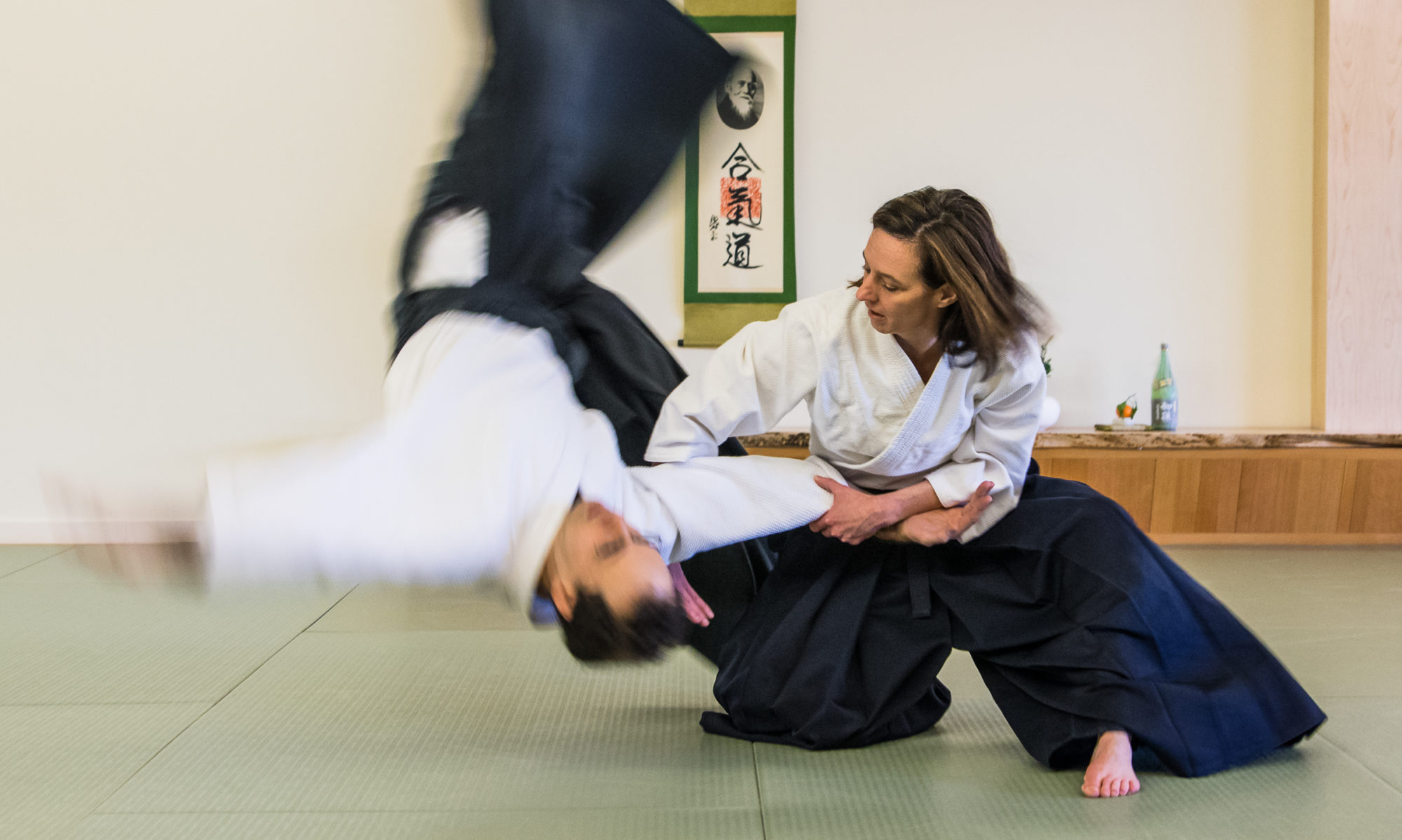
Natural movement and Aikido

“Natural movement”?

Humans are built to move

“Natural movement” was the big topic in fitness circles 5–10 years ago, but is still quite relevant to Aikido, and I still incorporate elements of natural movement in my warmups.

This type of movement practice is related to everything that we do with our bodies throughout the day.

Perhaps you have crawled under a fence, crossed a stream on a log, ducked under a branch, or climbed a steep and uneven trail. Or, you have climbed over some rocks, picked up a squirming child, reached for something on a top shelf, or simply stood up and walked around. These are all examples of how both surfaces and obstacles change the way we move. Because environments are variable, it was probably different every time you performed those movements.

Why is this important?

Developing your ukemi in Aikido is a process of finding out how to move naturally while protecting yourself from impact and torsion. Sometimes, ukemi is performed in a split second as a life-or-death response.

Even though it’s performed on a mat, there are still a lot of variables. Your partners’ height, strength, or experience level can vary wildly. So does the speed and intensity at which they are training with you. Your mood, fitness level, and injuries can change from day to day or month to month.

Ukemi is performed differently each time, even for the same technique. It is not proscribed or set in stone. Because we all have different bodies and minds, everyone has a different way of reacting, according to their own proportions, mechanics, flexibility, and abilities.

Why do you need to learn (or relearn) to move?

For beginners in Aikido, there is often a process of “relearning” how to perform natural movements that we learned as kids, like running, falling, rolling, and jumping. We have sat too much, and maybe not played enough.

Returning to (or starting) Aikido can be stressful on the body as we try to regain the flexibility, strength, and endurance we may have lost. It’s important to go slowly, and listen to and support your body.

In Aikido class, we usually start with gentle back rolls to strengthen and add flexibility to the spine, and help beginners to learn to protect their head and neck. Rolling also helps with flexibility in the hips and legs.

Ukemi is highly variable, so reflexes, responsiveness, and connection also need time to be allowed to develop.

In Aikido, we have to change where our center of gravity is depending on what we are doing in that split second. We turn one way and then very quickly in the opposite direction. We turn around our nage’s center, pivot, balance, and sometimes lose that balance. We even begin to be comfortable losing our balance in some situations. We become mindful of our body in space, and how it is reacting to the environment in that moment.

All aikidoka know the joy in being thrown, rolling and jumping back up, or being able to stand up easily after being pinned to the mat. Some of the greatest joy in aikido comes from in fluid natural reactions to throws.

But it can be hard to exercise! “Exercise” isn’t natural. Hunter-gatherers don’t “exercise.” They just take part in the activities of life. For a lot of people, the repetitive nature of exercise can make it difficult and boring.

One of the things I love about Aikido is that Aikido is endlessly novel. There is always something to explore in the movement, and in the interactions with another human. For me, even walking is boring to me. In the city, the majority of the walking or running we do is in shoes, and on solid, level ground. There is not a lot of variety.

So, how do you get some of that novel Aikido energy right now?

Luckily, our bodies are built for these movements and we crave them. We crave the novelty and the exploration of movement, and it is instantly rewarding.

Spend some time squatting, sitting on the floor, exploring how you get down and get back up again. The next time you pick up a stray sock on the floor, or get out of bed, do it as an exploration of how you are doing that movement.

Balance on one foot while you make coffee. Ground your feet on the floor and bring your awareness to the connection between your feet and the surface you are walking on.

See how it feels to build an awareness of the movements you do every day, and try to build an awareness of your environment right now.

And play.


10 ways to promote racial equity in your dojo

1. Collect Data: Determine the race demographics of your dojo or organization, and what the ratios of ranks, instructors, and seminars being taught are. Ask questions, like "why there are so few Black people in Aikido?" "what barriers or challenges do they face?" (Get free help from Dojo Show)

2. Put Out a Welcome Mat: Does your website and promotional materials includes pictures of Black people doing Aikido? Is there a publicly stated equal opportunity or non-discrimination policy on your website? Add inclusive language that lets all members know they will be valued equally.

3. Examine Your Beliefs:  No one thinks they are racist, but are you anti- racist? Many people have racist bias but are not do not know they do. Work to uncover any unconscious bias that you might have. Do you feel more comfortable training with someone who looks like you?  Do you know what implicit bias is? Link

4. Examine Segregation: Is your dojo in a neighborhood that is accessible and welcoming to Black people? Can students easily get to your location on public transportation? Consider offering classes in an accessible community center in a Black neighborhood? Remove financial barriers by providing scholarships.

5. Support Black Aikido Instructors: Do you have any Black teachers at your dojo? Invite Black instructors to teach seminars. Make sure there is proportional representation at organizational camps.  It is important to have role models for black students to feel represented. Model equity in your children's program.

6. Listen Deeply: Create formal and informal opportunities in your dojo or organization to talk about race. What is the experience of Black people training in Aikido? What challenges do they face? Everyone has a story to tell. Take the time to just listen.

7. Share Power: Give Black Aikido practitioners a place at the table in your dojo or organization. What is the race representation on your board or instructor roster? What message does that convey to your membership? All students benefit from the diversity of Black voices in leadership roles.

8. Be an Ally: If you are in the majority, use your position of power to assist and amplify the voices of Black people in Aikido.  Add your name to a petition. Write a letter. If you observe unfair or racist behavior, call it out. Racial equity affects all of us. Link

9. Educate Yourself: Read "White Fragility," by Robin DiAngelo, and "How to Be an Antiracist," by Ibram X Kendi. Watch "The Hate U Give," and "If Beale Street Could Talk." Listen to "Still Processing," "Pod Save the People," and "Code switch."

10. Do No Harm: Have a publicly stated and shared code of conduct with zero tolerance for racism, as well as a clear and safe grievance procedure. If necessary, consider if there are any skeletons in your closet and make amends. Apologize and make things right. 

10 things you can do to support women in Aikido

1. Collect Data
Gather date on the gender makeup of your dojo. What are the rank proportions, number of instructors, and seminars taught by gender? Ask questions.  Do you know why certain genders start Aikido? Why and when they quit? Create a survey. (Get free help from Dojo Show)

2. Put Out a Welcome Mat
Make sure your website and promotional materials includes pictures of women doing Aikido. Is there also a publicly stated equal opportunity/non-discrimination policy on your website? Consider adding inclusive language that lets all members know they will be valued equally.  Examples

3. Examine Your Beliefs
Uncover any unconscious bias that you might have. Do you prefer training with one gender over another? Do you correct one gender more than another? Do you use different language (good or effective vs. beautiful or flowing) to describe people’s Aikido based on gender? Do you know what implicit bias is?

4. Create Space
Create space, both physically and figuratively. Do you have adequate facilities like changing rooms for all genders? Do you ensure that women can train without unwanted attention or corrections from their training partners? Create a space for women to just train without  harassment or condescension.

5. Support Women Teachers
Do women teach at your dojo? Invite women to teach seminars. Make sure there is proportional representation of women teaching at organizational camps. Create opportunities for women teachers to sit on examination panels. Link

6. Listen Deeply
Create formal and informal opportunities for your dojo or organizational membership to talk about their training experiences and desires. What inspires women in Aikido? What challenges do they face? Everyone has a story to tell.

7. Put Women in Leadership Roles
Give women a true place of power at the table in your dojo or organization. Know the difference between having a woman serve in a President position vs. a secretary or admin role. We all benefit from the diversity of voices in leadership roles.

8. Be an Ally
If you are in the majority, use your position of power to assist and amplify the voices of women. Add your name to a petition. Write a letter. If you observe unfair or sexist behavior, call it out. Gender equity affects all of us. Link

9. Educate Yourself
Read stories by prominent women in Aikido about their experiences. (In Conversation with Aikido Women)

10. Do No Harm
Make sure you have a publicly stated and shared code of conduct with zero tolerance for sexual harassment as well as a clear and safe grievance procedure. If necessary, consider if there are any skeletons in your closet and make amends. Apologize and make things right.